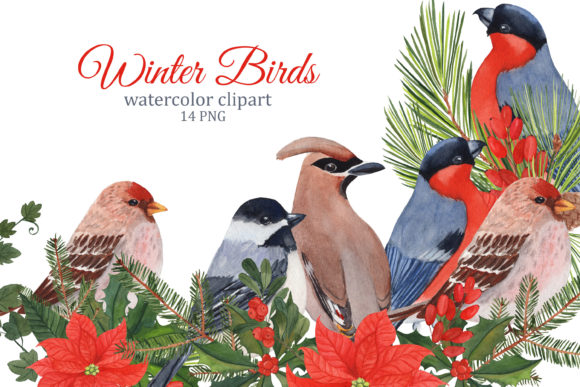
Winter Birds Watercolor Clipart: A Designer's Stitch Review
When I first opened the Winter Birds Watercolor Clipart file on my screen, my immediate reaction wasn't just about the aesthetic; it was about translation. As an embroidery designer, I don't just look at art; I look at how that art survives the needle. There is a distinct difference between a digital illustration meant for a website and one intended to become a tactile, stitched reality. This collection, categorized under Illustrations, carries a softness that is both its greatest strength and its most significant technical challenge. The mood is undeniably serene—evoking quiet snowfalls and still branches—but turning that watercolor bleed into clean satin and fill stitches requires a strategic approach.
The Visual Personality and Stitch Potential
The design personality here is gentle and organic. Unlike bold, graphic vector art that screams for high-contrast thread, these birds rely on subtle gradients and soft edges. In a real-world embroidery project, this translates to a need for careful thread selection. If you are planning to use this as a machine embroidery design, you cannot simply rely on the default color stops in your software. The beauty of the original digital embroidery file lies in its nuance. To replicate the watercolor effect, you might need to blend thread colors manually or utilize a high-density fill stitch with varied angles to mimic the brushstroke texture.
For those considering this for custom apparel, the layout feels natural on softer garments. I can immediately picture this working beautifully on a cream-colored linen tote or a heather grey sweatshirt. The lack of harsh outlines allows the design to sit comfortably on the fabric without looking like a stiff patch glued onto the surface. However, this softness demands respect. If your stitch density is too low, the "watercolor" look will turn into a muddy mess. If it is too high, you risk puckering lightweight fabrics.
Real-World Application: The Holiday Tote Scenario
Let's walk through a specific scenario to see how Winter Birds Watercolor Clipart performs in a client setting. Imagine a small shop owner preparing a limited run of holiday gifts. They want to create a premium tote bag design for a boutique coffee shop. The goal is a handmade product that feels exclusive and artistic.
In this case, the birds would be stitched onto a heavy canvas tote. Because canvas has a visible weave, the fabric texture interacts with the stitches. Here, the watercolor style is forgiving; slight imperfections in the fill stitch blend into the artistic intent. I would recommend using a cut-away stabilizer rather than tear-away. The soft edges of the birds need permanent support to prevent the design from distorting after the bag is filled with groceries or books. For the thread colors, I'd suggest moving away from primary blues and Reds. Instead, opt for variegated threads or a palette of slate, dove grey, and muted teal to maintain that wintry, atmospheric feel.
If this same design were applied to a sweatshirt embroidery project, the stakes change slightly. Fleece and french terry are stretchy and textured. The detailed feathers of the birds could get lost in the nap of the fabric. To combat this, a designer might need to add a subtle running stitch outline—not to box it in, but to define the silhouette against the fuzzy background. This ensures the finished product retains its clarity even from a distance.
Navigating Technical Limitations
While the artistic value is high, there are areas where Winter Birds Watercolor Clipart requires caution. The most critical factor is size. Watercolor effects rely on detail. If you attempt to shrink this design for a small hoop size, say under 3 inches, you risk losing the definition of the birds' features. Tiny details that look crisp on a monitor can become a tangled knot of thread when miniaturized. Always test the design on scrap fabric at your intended size before committing to a final piece.
Furthermore, consider the substrate. Dark fabrics present a unique challenge. Watercolor art often uses white space or light transparency to create depth. On a black navy hoodie, those light areas might disappear unless you use an underlay stitch effectively or choose opaque threads that pop. Conversely, on thin, stretchy baby clothes, the density of a fill stitch needed to capture the watercolor look might be too heavy. For baby embroidery, you might need to simplify the design, perhaps converting some filled areas to open running stitches to keep the garment breathable and soft against sensitive skin.
Curved surfaces, like caps, are another tricky territory. The structural seams of a hat can distort the fluid lines of these birds. If you are creating an embroidered patch to sew onto a cap later, that is a safer bet than direct-to-garment stitching on the curved front panel. This preserves the integrity of the illustration and prevents the bird's wing from looking warped.
Commercial Value and Brand Consistency
For the Etsy seller or creative entrepreneur, the visual appeal of this design directly impacts perceived value. Customers today appreciate the "hand-painted" look because it suggests artisanal quality. Using Winter Birds Watercolor Clipart can elevate a standard personalized gift into something that feels like a piece of wearable art. This enhances brand consistency if your shop focuses on nature-inspired or whimsical themes.
However, professionalism dictates that you verify the licensing terms. Just because a file is labeled as an illustration does not automatically grant commercial rights for resale as a digital asset or for unlimited physical production. Before listing these as design assets or selling hundreds of holiday embroidery items, confirm the license allows for commercial commercial embroidery use. Trust is built on transparency; knowing your legal standing protects your small business.
Final Designer Notes for Success
To ensure the best outcome with Winter Birds Watercolor Clipart, treat every new fabric as a fresh experiment. Do not assume the settings that worked on cotton will work on polyester blends. Create black and white mockups to check contrast levels before you even thread the machine. Check the stitch path in your digitizing software to ensure there are no unnecessary jumps that could ruin the smooth gradient effect.
Ultimately, this design shines when treated with patience. It is not a "load and go" graphic; it is a collaborative element that requires the maker's insight to truly flourish. Whether you are making a single pillow cover for your home or a batch of small shop products for a winter market, the result can be stunning if you respect the delicate balance between the digital source and the physical stitch.